
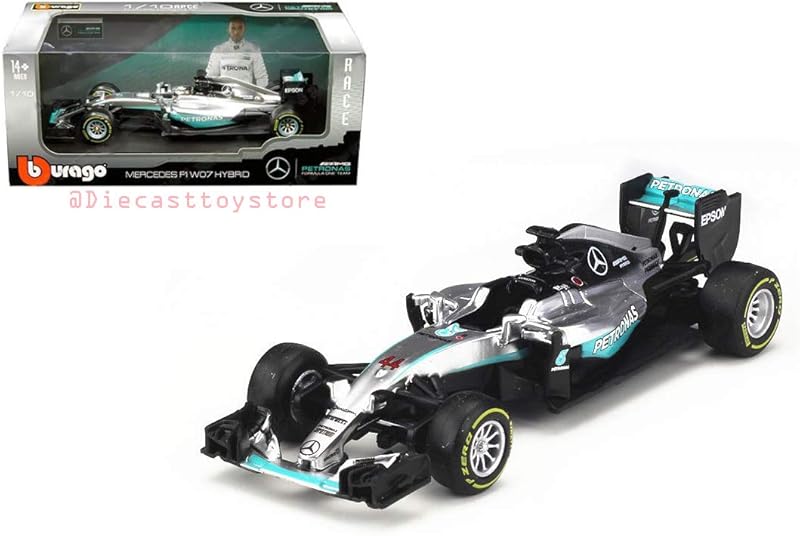
Bburago · Mercedes · 1:18
Bburago Mercedes W07, Hamilton #44
Championship-era Mercedes always has a stronger story than a random midfield car.
$65
BuyIf you want F1 cars worth collecting, here is the honest version: buy the stuff collectors keep chasing, not the stuff factories keep cranking out.
A lot of people search for F1 diecast investment advice when what they really want is simple. They want to buy something fun, enjoy it on the shelf, and not feel like it turned into a twenty-dollar garage sale item the second the box shows up. That is a reasonable goal.
The first thing to get straight is this: most F1 collectibles are not real investments. They are collectibles. The market is smaller, tastes shift, and nobody should be planning retirement around a 1:43 Verstappen car. But if you are already buying F1 models because you love the sport, you can absolutely make smarter choices. Some brands, scales, and race-specific releases tend to hold value better than others.
If you want the short version, Minichamps and Spark usually sit in the stronger resale lane, especially when the release is limited, race-specific, or tied to a big moment. Collectors know those names, trust the finish quality, and are more likely to pay up later for a piece they missed the first time.
Bburago is different. I like Bburago. It is the easiest way to build a shelf without spending silly money, and the best stuff on the main diecast page proves that. But in general, mass-market Bburago releases are made to be accessible, not scarce. That is great for buyers. It is not great for appreciation.
This is the biggest lesson. If a model is easy to find forever, it is probably not going to climb much. Scarcity matters. Minichamps limited editions, Spark race-win specials, and event-specific releases are the stuff collectors circle back to later. Once they are gone, they are gone, and that is when prices start to move.
On the flip side, if a brand makes a giant run of a standard-season car and every major retailer still has it six months later, that is a shelf purchase, not a value play. Nothing wrong with that, just know what lane you are in.
If you are trying to collect F1 cars that increase in value, title cars are always worth a closer look. Dominant championship machines, final title cars, and historically important eras give a model a built-in story. That story keeps mattering years later.
A perfect example is the Bburago Mercedes W07, Hamilton #44 (ASIN: B07JR5QSBF). It is not a scarce boutique release, but it represents a championship-winning Mercedes from one of the sport's defining modern runs. Cars like that tend to stay relevant because fans never stop caring about the era.
The same logic works with Red Bull dominance too. The Spark Red Bull RB19 Canada GP Win (ASIN: B0D548FMZ5) makes more collector sense than a random generic RB19 because it ties the model to a specific win in a season people will remember.
This is where emotion shows up in the market. A driver's last season with a team, a retirement year, a first Ferrari season, a final championship, or a major career milestone all give collectors a reason to come back later and say, "I should have bought that one."
Hamilton's Ferrari era is a good example of a moment that already feels bigger than an ordinary year change. The Bburago Ferrari 2025 Season Car, Hamilton #44 (ASIN: B0DTJJ3HVF) is still a mass-market piece, but it is tied to a historic team-driver pairing people are going to remember. If you are buying a mainstream car, that kind of narrative is what you want.
Collectors love one-offs. Monaco specials, chrome tribute liveries, race-win versions, farewell colors, anniversary schemes, and region-specific editions all have an edge because they feel like moments, not just merchandise. If two models cost about the same and one is a plain season car while the other marks a specific event, I would take the event car every time.
This is also why Minichamps tends to hold value better than basic entry-level brands. It is not just finish quality. It is the tendency to capture a specific memory, not just a team in a generic season.
1:18 cars get attention because they have presence. They look expensive, they photograph well, and they anchor a shelf. But 1:43 is often the stronger collector sweet spot because serious brands release more race-specific cars there and collectors can own more of them without needing another bookcase. 1:64 is growing, especially with MINI GT, but it still feels more niche in pure F1 collecting.
So if you are chasing long-term collectibility, I would rather own a limited 1:43 Minichamps or Spark car than a giant 1:18 mass-market release everybody can buy any day of the week.
I am not saying to buy diecast like stocks. I am saying if you are going to spend money on an F1 car anyway, buy the one with a real story behind it. Buy the championship car. Buy the retirement car. Buy the special livery. Buy the limited-run Minichamps instead of the endlessly available random release if the difference makes sense for your budget.
That way, even if the value never jumps, you still end up with the cooler car on the shelf. And if it does hold value better, that is a nice little bonus.
Championship-era Mercedes always has a stronger story than a random midfield car.
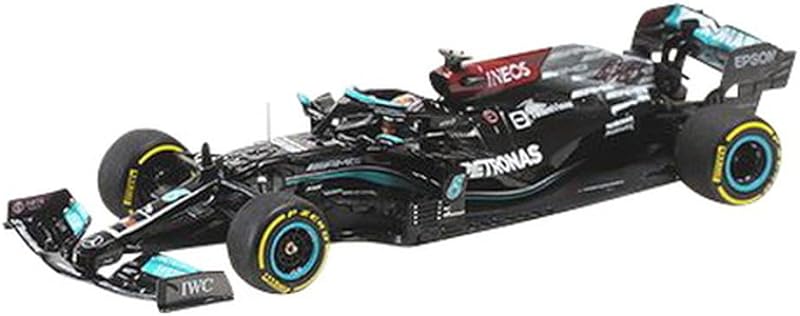
Race-specific Minichamps releases are exactly the kind of cars collectors hunt later.
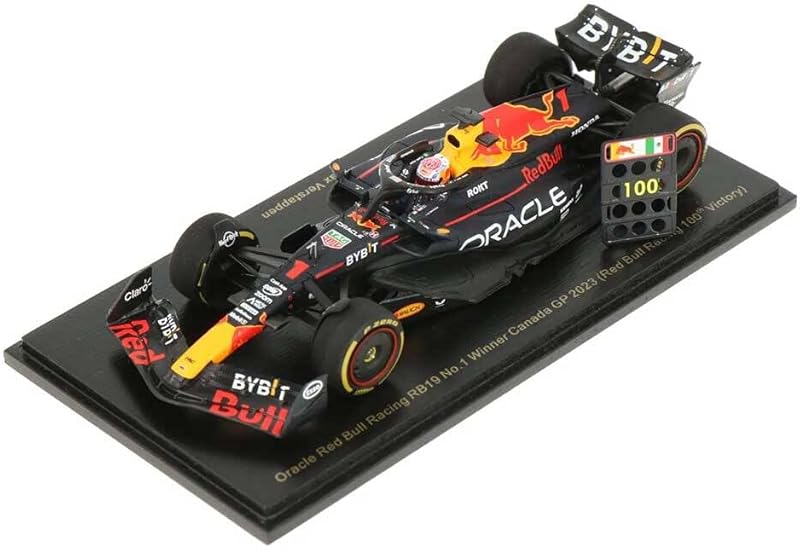
Specific race, dominant season, premium brand. That is a much better formula than generic volume releases.