
A simple way to start collecting F1 cars without wasting money on bad scales, fake listings, or hype-priced secondaries.
If you just got into Formula 1, collecting can get expensive fast. That is why the best beginner move is not chasing rare cars. It is building a shelf you actually enjoy looking at, one smart buy at a time.
There are a lot of ways to start an F1 collection. Some people want cheap Hot Wheels they can grab in minutes. Some want proper diecast models that feel like miniature display pieces. Both are fine. What matters is starting in the right lane for your budget, your space, and how deep you really want to go.
Because the cars carry memory. A Ferrari in red, a papaya McLaren, a championship-era Mercedes, a Verstappen Red Bull, they all say something right away. A good F1 model gives you a piece of a season, a driver, or a team you care about. That is what makes this hobby stick.
It also scales well. You can start cheap with a five-pack or a couple singles, then move into better 1:43 or 1:18 cars once you know what you actually like. You do not need a huge budget to get a collection going. You just need to avoid the dumb mistakes early.
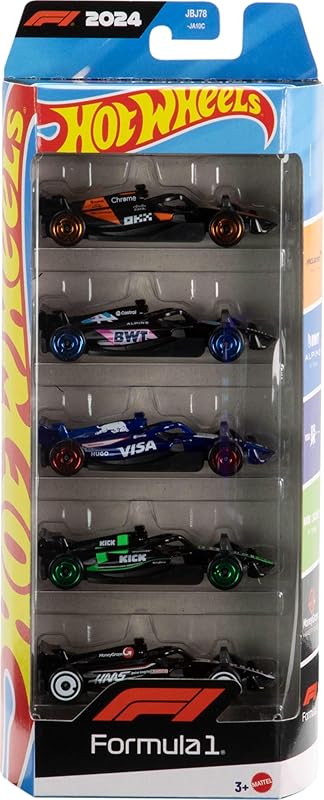
If you are an F1 diecast collecting beginner, Hot Wheels is the easiest on-ramp. The price is low, the cars are easy to find, and you can learn pretty quickly which teams and liveries you actually want more of. It is the best answer for people searching how to start an F1 collection without dropping serious money on day one.
The best starting point is usually the five-pack, because it gives you variety in one buy and instantly makes your shelf look like a collection instead of one lonely car.
Once you know your favorite teams, move into better singles and premium 1:64 cars. If you want more beginner-friendly options, the full Hot Wheels page is the cleanest place to start.
After Hot Wheels, 1:43 is where a lot of collectors settle in. It gives you more detail, better packaging, and a more grown-up display feel without taking over the whole room. If your goal is to build a good-looking lineup across multiple teams, 1:43 is hard to beat.
Bburago is usually the best first step here because the price stays sane. You are not getting the ultra-premium finish of Spark or Minichamps, but you are getting a car that actually looks like something you meant to buy.
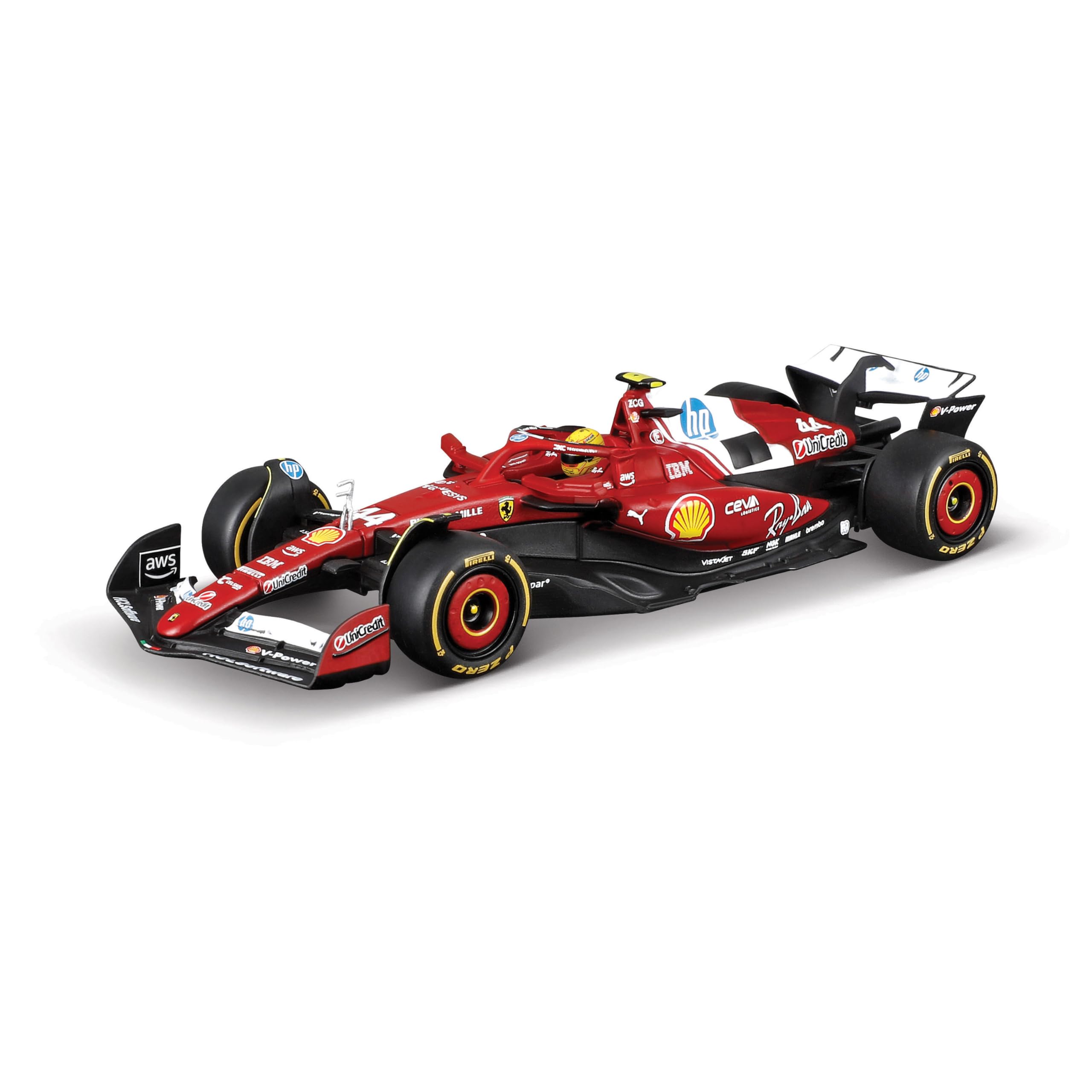
Current-era Ferrari, shelf-friendly size, and a strong value buy.
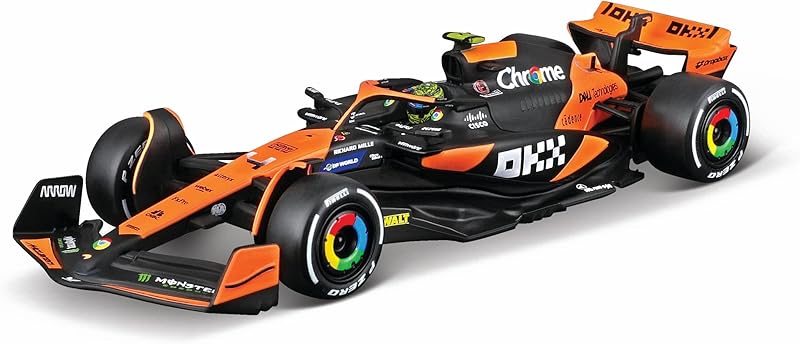
A strong papaya pick if McLaren is the team that pulled you in.
If you want to compare more scales, brands, and price ranges, head over to the main diecast page. That is where the hobby starts feeling less like toys and more like collecting.
Do not rush into 1:18 just because the photos look great. Bigger cars cost more, need more room, and make more sense when you are buying with intent. The right time to upgrade is when one driver, one season, or one team really means something to you and you want that car to have presence across the room.
That is where something like a Hamilton Ferrari or a championship-era Mercedes earns its keep. A 1:18 should feel like a statement buy, not a panic buy because the internet told you to go premium.
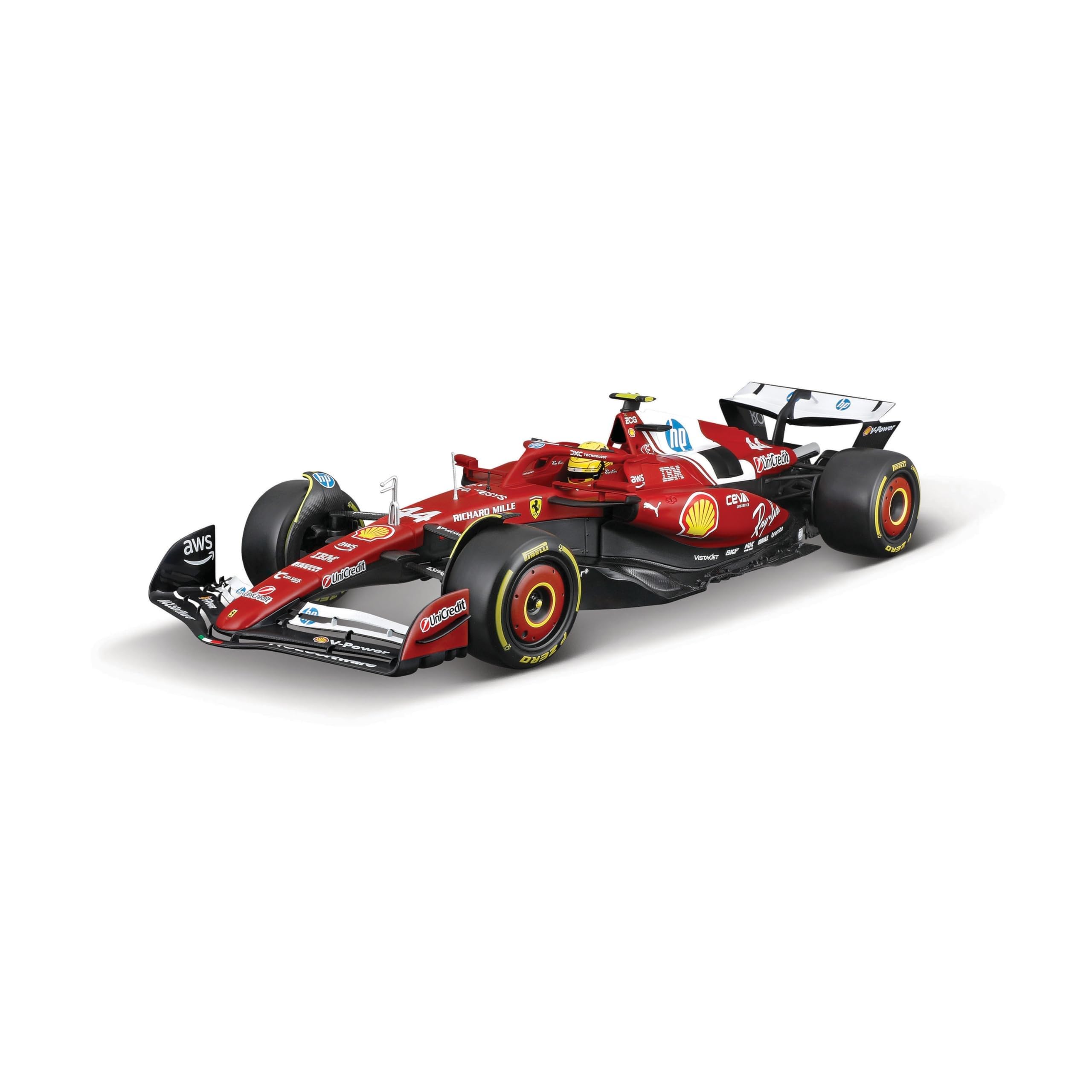
The kind of bigger buy that makes sense once you know what you love.
First, avoid overpriced secondary-market listings unless you know exactly what makes a piece rare. A lot of beginners see low stock, panic, and pay collector prices for stuff that gets restocked later or was never that special to begin with.
Second, watch for fake or sketchy listings. If the product photos look inconsistent, the seller info feels thin, or the title reads like keyword soup, back out. A legit listing should make it clear what scale you are getting, which driver or team it is, and who made it.
Third, do not mix scales too randomly at the beginning. A shelf with one 1:18, three 1:43s, and a few Hot Wheels can work, but only if you did it on purpose. If you are just getting going, keep one lane for a while so the collection looks cohesive.
That is really it. The best F1 collection is not the biggest one. It is the one that still makes sense a year from now. Start simple, buy with intent, and let the shelf tell the story.